There is a very specific delusion that plagues modern founders, especially after they raise a little bit of money or cross their first million in revenue. they sit in a boardroom with an expensive creative agency, point to companies like Apple, Patagonia, or Tesla, and they say, “we don’t just want to be a software company. we want to be a lifestyle brand. we want to start a movement.”
then they launch a hashtag on twitter. they buy organic cotton t-shirts with their logo on them and force their employees to wear them. they write a mission statement about “empowering synergies” and post a manifesto on their about page.
and they wait for the crowds to show up with pitchforks and banners, ready to die for their B2B inventory management software.
the crowds never show up.
instead, the market looks at them, rolls its eyes, and goes back to buying whatever is cheapest.
this happens because founders fundamentally misunderstand what a movement actually is. they think a movement is just a really successful marketing campaign. they think if they just get enough “brand awareness” and run enough emotional super bowl ads, people will suddenly start identifying with their corporate entity.
lol. that is not how human psychology works. nobody wakes up in the morning and wants to join a corporate marketing campaign.
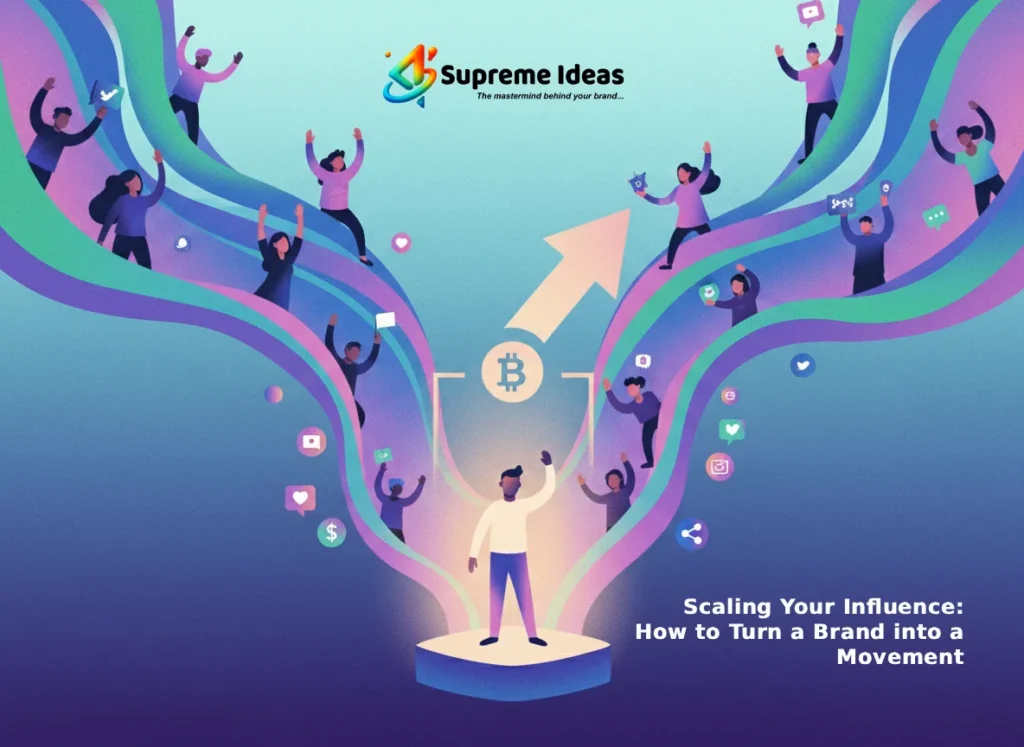
a brand is a mechanism for selling things. a movement is a mechanism for changing things. you can have a wildly successful brand without ever starting a movement. but if you actually want to cross that chasm—if you want to build a level of influence where your customers literally tattoo your logo on their bodies or defend you viciously in reddit comment sections—you have to stop acting like a vendor. you have to start acting like a revolutionary.
this is the definitive, brutal guide to scaling influence. we are going to tear down the artificial “lifestyle brand” nonsense. we will look at the exact mechanics of mass mobilization, the necessity of having a public enemy, how to invent a shared lexicon, and how to decentralize your own microphone so the community takes over.
if you do not want to polarize people, stop reading now. movements are not for the timid.
The Architecture of a Movement: You Must Have an Enemy
we have to start with the most uncomfortable truth about human nature. human beings do not unite around positivity.
if you want to start a club, you can unite people around a shared interest. “we all like knitting.” that is a club. if you want to start a movement, you must unite people around a shared frustration, a shared anger, or a shared enemy.
movements are fueled by friction. they are a collective uprising against an unacceptable status quo. if you do not have an enemy, you do not have a movement; you just have a very nice mission statement.
Contrast: Good Enemies vs. Bad Enemies
when i tell founders they need an enemy, they usually get it completely wrong.
-
The Bad Approach: The founder decides their enemy is their direct competitor. “We are the movement against Salesforce!” No, you aren’t. That isn’t a movement; that is just competitive positioning. The consumer does not care about your corporate rivalry. They don’t hate Salesforce the way you hate Salesforce.
-
The Good Approach: The founder decides their enemy is an ideology, a broken system, or an oppressive status quo.
let’s look at real-world examples. when HubSpot started, they didn’t say “our enemy is Marketo.” they said, “our enemy is Outbound Marketing. our enemy is the sleazy, interruption-based, cold-calling culture that treats customers like garbage.” they named the enemy, and they offered a new religion: Inbound Marketing.
when CrossFit started, their enemy wasn’t Planet Fitness. their enemy was the mirror-obsessed, isolated, highly-machined bodybuilding culture that ignored actual functional human health.
your enemy must be something that your target audience already secretly hates, but hasn’t been able to articulate yet.
Diagnosing the Shared Frustration
to find your enemy, you have to go back to the deep psychological pain we talked about in the customer avatar guide.
what is the thing your best customers complain about after their third beer? what is the systemic unfairness that is holding them back?
if you run an accounting software company for freelancers, your enemy isn’t QuickBooks. your enemy is the oppressive, terrifying complexity of the tax code that makes independent creators feel like criminals for trying to earn a living outside the 9-to-5 matrix.
you don’t sell accounting software. you sell a weapon to fight back against the bureaucracy that wants to crush the independent worker.
do you see the difference? the first one is a brand. the second one is a rallying cry.
if your marketing copy is not explicitly naming and attacking the status quo, you are not building a movement. you are just politely asking for market share.
The Shift from Consumer to Participant (Identity Creation)
brands have customers. customers engage in a transactional relationship. “i give you fifty dollars, you give me a pair of shoes. we are done.”
movements have members. members engage in an identity relationship. “i wear these shoes because wearing them signals to the world that i belong to a specific tribe of people who beleive what i beleive.”
to turn a brand into a movement, you have to transition your audience from passive consumers into active participants. you have to give them an identity to step into.
The “I Am” Framework
you know you have crossed into movement territory when your customers use the words “I am” instead of “I use.”
nobody says, “I am a Microsoft Word user.” they just use it. but people say, “I am an Apple guy.” “I am a CrossFitter.” “I am a Bitcoin maximalist.”
how do you engineer that? you have to define the characteristics of the in-group.
-
The Misconception: Founders think identity is created by the aesthetic of the brand. “If we have really cool minimalist packaging, people will identify with us.”
-
The Reality: Identity is created by shared struggle and shared values. It is created by sacrifice.
if you want people to identify with your movement, you have to ask them to do something difficult. (yes i know that sounds dramatic—whatever, it is the absolute truth of tribal psychology).
groups that are easy to join have very weak identities. groups that require initiation, sacrifice, or a change in behavior have incredibly strong identities.
if your B2B software requires a company to completely rethink how they run their sales team, and the onboarding takes 30 days of hard work… the companies that survive that onboarding will become absolute zealots for your product. they will wear your t-shirt because the t-shirt proves they survived the crucible. they are now part of the elite “in-group” that understands the new way of doing things, while the rest of the industry is stuck in the dark ages.
The Anti-Avatar as an Identity Magnet
we covered the Anti-Avatar before, but it is the strongest tool for identity creation.
you must publicly define who is not allowed in your movement.
if you run a high-end copywriting agency, you publish a manifesto saying, “We do not work with companies who want to use AI to spam a million people with generic garbage. If you want cheap hacks, go somewhere else. We are for the artisans who actually respect their audience’s attention.”
when a founder who values craftsmanship reads that, they instantly identify with you. by insulting the people they hate, you bonded with them. you drew a line in the sand.
movements require borders. if everyone is allowed in the movement, it’s not a movement. it’s just a crowd.
The Shared Lexicon: Inventing a Language
if you look at any major movement in history—political, religious, or corporate—you will notice something incredibly consistent. they all invent their own words.
cults do this maliciously to isolate their members from the outside world. movements do this constructively to create high-bandwidth communication among the in-group.
if you want to scale your influence, you have to invent a shared lexicon.
Naming the Problem and the Solution
when you identify the enemy, you cannot just use generic terms to describe it. you have to give it a name.
when Russell Brunson built ClickFunnels, he didn’t just say, “traditional websites are bad for conversions.” he coined a phrase. he called them “Digital Brochures.” he made “website” a dirty word. if you were in his movement, you didn’t have a website, you had a “Funnel.”
he invented a lexicon.
-
“Value Ladder”
-
“Epiphany Bridge”
-
“Funnel Hacker”
if you walked into a room of ClickFunnels users and started using those words, you instantly signaled that you were part of the tribe. if an outsider walked in, they wouldn’t understand the conversation.
-
The Bad Approach: Using industry-standard jargon that your competitors also use. “We offer synergistic, cloud-based omni-channel marketing solutions.” (You sound like a robot. Nobody will rally behind this).
-
The Good Approach: Taking a complex concept and giving it a proprietary, emotional name.
if you are a productivity coach, you don’t call it “time management.” you call it “Time Sovereignty.” you don’t call the problem “distraction.” you call it “The Attention Leech.”
when you name a concept, you own the concept.
The Power of the “Inside Joke”
your brand must develop inside jokes, acronyms, and shorthand that only your best customers understand.
this is how you build deep community affinity. when your customers can joke with each other using the vocabulary you invented, you are no longer a vendor. you are the architect of their culture.
i mean—it’s intresting how resistant corporate founders are to this. they think it sounds “unprofessional.” they want their copy to be perfectly clean and universally understood.
universal understanding is the enemy of intimacy. if everyone understands it, nobody feels special for understanding it.
invent the words. write a manifesto. force your audience to learn your language if they want to participate in the new reality you are building.
Decentralizing the Microphone: The True Test of a Movement
this is the operational bottleneck that kills 99% of brands trying to become movements.
when a company is a brand, the communication architecture is a megaphone. the company stands on a stage and yells at the audience. “buy our new feature! look at our black friday sale! read our new blog post!”
the flow of information is strictly one-way. Company -> Customer.
if you want a movement, you have to put the megaphone down and build a stadium. you have to create a space where the flow of information is Customer <-> Customer.
a movement only exists when your followers start talking to each other, helping each other, and organizing themselves without your direct involvement.
The Trap of the “Owned” Community
founders hear this and think, “okay, i’ll start a Facebook group for my software users.”
they start the group. they make themselves the admin. every day, the founder posts a new update. a few people like it. nobody talks to each other. the founder gets exhausted trying to “drive engagement” and eventually the group dies.
-
What most people misunderstand: A community is not an audience. An audience gathers to hear you speak. A community gathers to interact with each other because they share a common goal.
if you are the only one posting in your community, it is an audience.
How to Decentralize
to build a true movement, you have to relinquish control of the narrative. you have to empower the super-users to take over.
1. Create the Stage, but Step Off It you build the Slack channel, the Discord server, or the live event. but your job is not to be the star of the show. your job is to be the host of the party.
you introduce two people who are trying to solve the same problem. “Hey Sarah, I know you were struggling with the API integration last week. John here actually just figured out a brilliant workaround. John, can you show her how you did it?”
then you shut up and get out of the way.
2. Elevate the Heroes when a member of your movement achieves a massive result using your methodology, you do not just write a sterile case study about how great your software is.
you put that member on a pedestal. you make them famous within your ecosystem. you let them host a webinar teaching the rest of the community how they did it.
when the rest of the community sees that they can become the heroes of the story, the engagement explodes. they stop looking to you for all the answers, and they start looking to each other.
3. Accept the Chaos this is the hardest part for control-freak founders.
when your movement actually scales, your community will start doing things you didn’t authorize. they will create unofficial local meetup groups in cities you don’t operate in. they will invent weird workarounds for your product that you didn’t intend. they might even start complaining publicly in your own forums about a feature they hate.
do not shut this down. do not censor them (unless it is actually toxic or abusive).
if you censor the organic chaos of a community, you kill the movement. the fact that they care enough to complain, organize, and hack your product means they feel ownership over it.
the moment they feel ownership, you have won. you are no longer selling a product; you are maintaining the infrastructure of their culture.
The Sacrifice: What Are You Willing to Lose?
you cannot be a revolutionary if you are terrified of losing a few dollars.
every true movement has a moment of profound sacrifice. there is a moment where the brand must make a decision that actively hurts their short-term revenue in order to prove that they actually beleive what they are saying.
if your “mission” only exists when it is profitable, it is not a mission. it is a marketing angle. the market can smell the difference.
The Cost of Belief
let’s look at a classic example: Patagonia. they built a movement around anti-consumerism and environmental protection. on Black Friday—the biggest retail day of the year—they took out a full-page ad in the New York Times that said, “Don’t Buy This Jacket.”
they literally told people not to buy their product unless they absolutely needed it, and they offered to repair old jackets instead of selling new ones.
from a purely short-term financial perspective, that is insane. it is leaving millions of dollars on the table. but from a movement-building perspective, it is the ultimate flex.
it proved that their ideology was more important than their quarterly earnings. and ironically, because it proved their authenticity, their sales skyrocketed. the movement rallied behind them because the sacrifice made the belief real.
How Founders Fail the Sacrifice Test
you will face your own version of this test.
you will build a movement around “quality and craftsmanship.” and then a massive, terrible corporate client will offer you a $500,000 contract to produce cheap, mass-market garbage for them.
if you take the money, your team will know you are a fraud. your best clients will find out and realize you are a hypocrite. the movement dies, and you revert back to being a commodity vendor.
if you say no to the $500,000… you feel the pain of the sacrifice. but your team rallies behind you. you publish a blog post explaining why you turned down half a million dollars because it violated the core tenets of your movement.
the trust that generates in your community is worth five million dollars.
-
The Reality Check: Look at your company’s core values. If you have never lost money, fired a profitable client, or walked away from a deal because of those values… they are not values. They are just words on a wall.
a movement requires martyrs. sometimes, that martyr has to be your own short-term P&L.
The Mechanics of Mobilization (The Trigger Event)
you have the enemy. you have the identity. you have the shared language. you have the decentralized community.
now, you have to actually make them do something.
a movement that just sits around talking is a philosophy club. a real movement mobilizes. it takes action in the physical or digital world.
you must engineer “Trigger Events.”
Giving Them a Mission
your community wants to fight the enemy you identified in step one, but they don’t know how. you have to hand them the weapon and tell them where to aim.
-
The Bad Approach: “Hey guys, our new feature is live, please go upvote us on Product Hunt!” (This is a selfish corporate request. The community will ignore it).
-
The Good Approach: “The old guard of this industry just lobbied to pass a regulation that hurts independent creators. We built a free tool that completely bypasses their new regulation. It goes live tomorrow. We need every single one of you to share this link at 9:00 AM so we can crash their servers and show them we won’t be bullied.”
(yes, this is aggressive. movements are aggressive).
do you see the psychological shift? you aren’t asking them to promote your product. you are asking them to participate in a coordinated strike against the shared enemy. your product just happens to be the weapon they are using.
The Annual Pilgrimage
every major movement has a physical or digital gathering that serves as the pinnacle of their calendar year.
Apple has the WWDC keynote. Salesforce has Dreamforce. CrossFit has the CrossFit Games.
you need to build an annual event that is not a “user conference.” a user conference is boring. people go to user conferences because their boss paid for the ticket and they want a free lunch.
you build a pilgrimage. it is a multi-day event where the tribe gathers to reaffirm their identity. you celebrate the heroes of the community. you publicly mock the enemy. you unveil the new weapons (products) you have built for them.
when 500 people who speak your shared lexicon are placed in the same room for three days, the energy compounds. they realize they are not alone. they realize the movement is real.
they leave that event with religious fervor, and they go back to their own cities and recruit ten more people into the movement.
Common Objections: “But I Sell B2B SaaS!”
when i lay out this framework, the pushback is almost always from B2B founders.
“this is great for fitness brands or consumer apparel. but i sell compliance tracking software to HR departments. i can’t start a movement. my product is too boring.”
this is a massive, limiting belief.
there is no such thing as a boring product if it solves a bleeding neck. and there is absolutely room for a movement in B2B. in fact, it is often easier in B2B because the standard of marketing is so terribly boring that anyone with a pulse stands out.
The B2B Movement Playbook
let’s take the “boring” compliance tracking software.
how do you build a movement around that?
1. Find the Enemy: The enemy is not “non-compliance.” The enemy is the soul-crushing, bureaucratic, paper-pushing nightmare that steals HR professionals away from what they actually want to do—which is help humans grow. The enemy is the fear of getting sued because a spreadsheet had a typo.
2. The Identity: You transition them from “HR Administrators” to “Culture Architects.” You tell them that compliance is just table stakes, and your software automates the garbage so they can get back to building incredible companies.
3. The Lexicon: You stop calling it a “Compliance Dashboard” and you call it the “Culture Shield.”
4. The Mobilization: You host a massive digital summit called “The Death of Bureaucracy.” You don’t pitch your software. You bring in incredible speakers to talk about building remote cultures, mental health in the workplace, and redefining HR.
suddenly, you aren’t a boring SaaS vendor. you are the leader of the revolution to save HR professionals from administrative hell.
they will buy your software not because it has the best features, but because you are the only company that actually understands their existential dread.
The Reflective Conclusion: Legacy vs. Commodity
building a movement is exhausting. it requires a level of conviction, vulnerability, and operational stamina that most founders simply do not possess.
it is much easier to just be a brand. you can run your facebook ads, optimize your conversion rate, test your headlines, and make a very comfortable living. if you just want to make money, you do not need a movement.
but if you want to build a legacy… if you want to build a company that is immune to competitor pricing, immune to algorithm changes, and immune to economic downturns… you have to cross the chasm.
commodities compete on price. brands compete on awareness. movements don’t compete at all.
when you build a movement, you create a monopoly of identity. your customers will not leave you for a competitor who is 10% cheaper, because leaving you would mean abandoning their tribe. it would mean admitting that they no longer beleive in the shared vision.
human beings are desperate for meaning. they are desperate to belong to something larger than themselves. the modern world is isolated, fragmented, and lonely.
if you can build a company that doesn’t just sell them a tool, but actually hands them a torch and says, “we are marching this way, do you want to come?”… they will follow you to the ends of the earth.
you have the power to stop being a vendor and start being a leader.
but you have to be willing to pick a fight. you have to be willing to invent the language. and you have to be willing to sacrifice your own ego to let the community take the microphone.
…anyway, look at your homepage right now. are you selling a product, or are you leading a revolution? if it’s just a product, you have a lot of work to do.